
Criminal Lawyers in New Jersey
Your Freedom is Our Business
We're Here To Help Contact US
With Over 35 Years of Experience

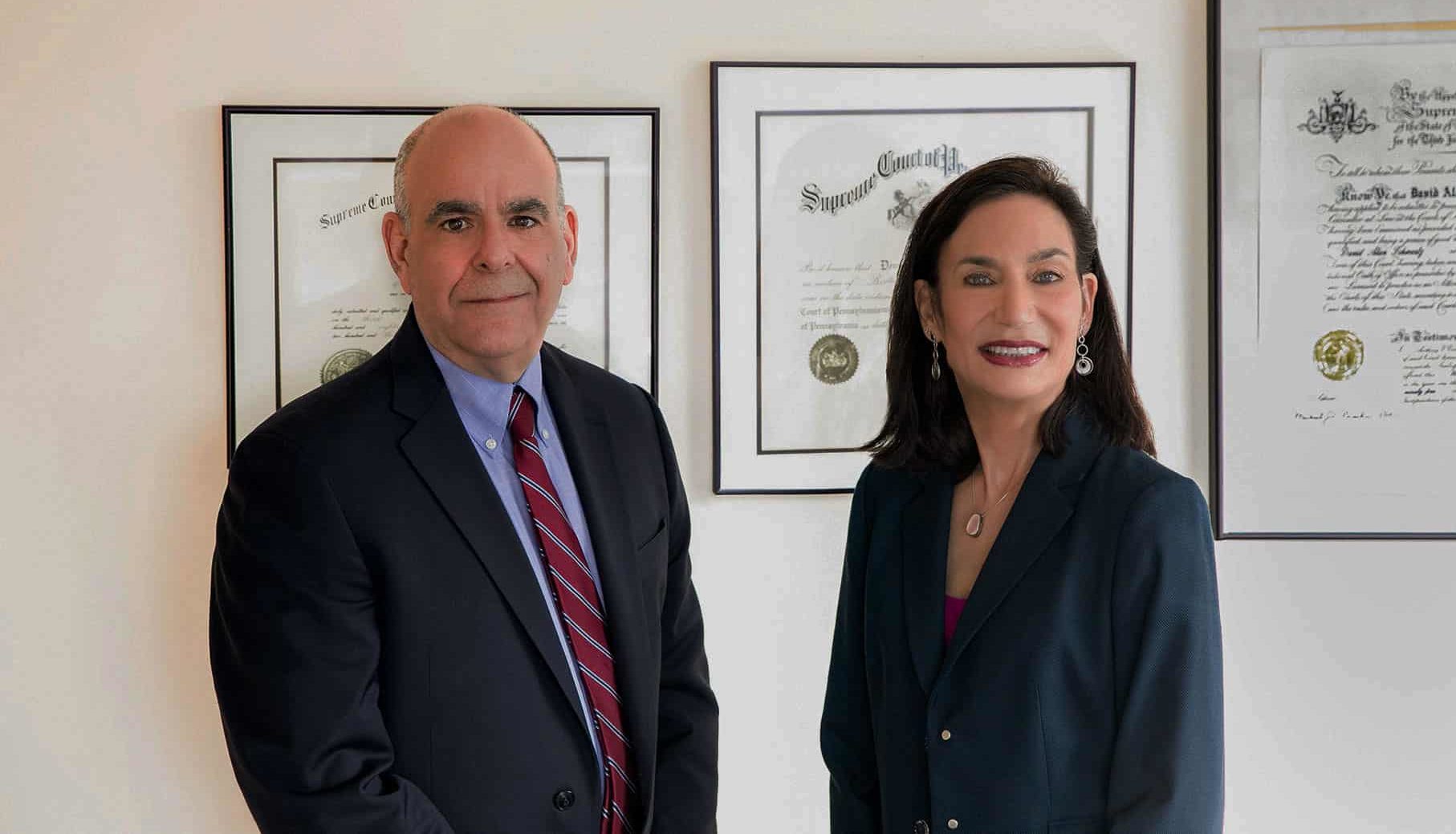
David A. Schwartz, Esq.

Leslie B. Posnock, Esq.
Schedule a Consultation Today!
Representing the Accused Throughout New Jersey
We're Here To Help Contact US
Schwartz & Posnock – New Jersey Criminal Lawyers
Representing the Accused Throughout New Jersey
We are Criminal Lawyers in New Jersey with over 35 years of experience concentrating our practice in federal and state defense of criminal cases brought in New Jersey under both state and federal criminal law. We practice throughout the State of New Jersey and have offices in Monmouth County, Middlesex County, Union County and Essex County.
OUR COMMITMENT | Positive Results
We are committed to producing positive results for people and businesses through our knowledge, hard work, and more than three decades of experience as criminal trial and appellate lawyers. Our attorneys believe that the presumption of innocence is the hallmark of the American criminal justice system. Applying our knowledge and experience to your case, we intend to make that presumption work for you.
We regard the representation of the accused to be the highest calling of the legal profession. We began our careers as criminal defense lawyers in 1983 in the tough city courtrooms of Philadelphia, and have remained true to that calling over 35 years later. When your liberty, employment, and reputation are at stake, a dedicated advocate is your most valuable asset. When you are faced with criminal charges, we will stand with you every step of the way and will be your most valued advocate.
Schwartz & Posnock – New Jersey Criminal Lawyers
Representing the Accused Throughout New Jersey
We are Criminal Lawyers in New Jersey with over 35 years of experience concentrating our practice in federal and state defense of criminal cases brought in New Jersey under both state and federal criminal law. We practice throughout the State of New Jersey and have offices in Monmouth County, Middlesex County, Union County and Essex County.
OUR COMMITMENT | Positive Results
We are committed to producing positive results for people and businesses through our knowledge, hard work, and more than three decades of experience as criminal trial and appellate lawyers. Our attorneys believe that the presumption of innocence is the hallmark of the American criminal justice system. Applying our knowledge and experience to your case, we intend to make that presumption work for you.
We regard the representation of the accused to be the highest calling of the legal profession. We began our careers as criminal defense lawyers in 1983 in the tough city courtrooms of Philadelphia, and have remained true to that calling over 35 years later. When your liberty, employment, and reputation are at stake, a dedicated advocate is your most valuable asset. When you are faced with criminal charges, we will stand with you every step of the way and will be your most valued advocate.
Representing the Accused Throughout New Jersey

OUR SERVICES | Superior Service
We provide superior service during every phase of defending a criminal case – from investigating the crime scene, conducting the most up-to-date legal research, consulting with the most qualified experts, vigorously defending you in the courtroom, to negotiating on your behalf with prosecutors in the State, Federal, and Municipal courts of New Jersey. If you have already been convicted of a crime, you may have a basis to appeal the conviction, or to seek post-conviction relief, or an expungement of your record. Our lawyers are licensed to appear before the United States Supreme Court, and in the State and Federal courts of New Jersey, New York, Pennsylvania and California.
MEET WITH US | Unique Approach
While you are visiting our website, please take the time to carefully review the information about our defense strategy, the professional articles we have written, our biographical information, and our criminal defense blog. We have included information here to help you understand our unique approach to the defense of criminal cases in the State, Federal, and Municipal Courts. However, hiring a criminal defense lawyer is an important decision which should not be based solely on a web site or on an advertisement in the Yellow Pages. Before you decide on a New Jersey criminal defense lawyer, schedule a meeting with us to discuss your case and how we can obtain a positive result for you. We have offices conveniently located in Essex County (Livingston), Monmouth County (Eatontown), Middlesex County (East Brunswick), and Union County (Linden), New Jersey.
Representing the Accused Throughout New Jersey

OUR SERVICES | Superior Service
We provide superior service during every phase of defending a criminal case – from investigating the crime scene, conducting the most up-to-date legal research, consulting with the most qualified experts, vigorously defending you in the courtroom, to negotiating on your behalf with prosecutors in the State, Federal, and Municipal courts of New Jersey. If you have already been convicted of a crime, you may have a basis to appeal the conviction, or to seek post-conviction relief, or an expungement of your record. Our lawyers are licensed to appear before the United States Supreme Court, and in the State and Federal courts of New Jersey, New York, Pennsylvania and California.
MEET WITH US | Unique Approach
While you are visiting our website, please take the time to carefully review the information about our defense strategy, the professional articles we have written, our biographical information, and our criminal defense blog. We have included information here to help you understand our unique approach to the defense of criminal cases in the State, Federal, and Municipal Courts. However, hiring a criminal defense lawyer is an important decision which should not be based solely on a web site or on an advertisement in the Yellow Pages. Before you decide on a New Jersey criminal defense lawyer, schedule a meeting with us to discuss your case and how we can obtain a positive result for you. We have offices conveniently located in Essex County (Livingston), Monmouth County (Eatontown), Middlesex County (East Brunswick), and Union County (Linden), New Jersey.
With Over 35 Years of Experience

David A. Schwartz, Esq.

Leslie B. Posnock, Esq.

Our Locations
Monmouth County
99 Corbett Way, Suite 203 Eatontown, NJ 07724
732-544-1460
Essex County
70 South Orange Avenue, Suite 106 Livingston, NJ 07039
732-544-1460
Middlesex County
4G Auer Court East Brunswick, NJ 08816
732-544-1460
Union County
2015 North Wood Ave. Linden, NJ 07036 732-544-1460
732-544-1460